
Why Corporate Slide Creation Breaks Down
Corporate decks often fail for predictable reasons: content gets scattered across drafts, formatting drifts from one version to the next, and key messages lose clarity when teams rush to “make it look right.” Analysts may provide numbers, leaders may want sharper narratives, and design teams may spend ai for corporate slides hours aligning fonts, spacing, and layouts. The result is a cycle of revisions that delays decisions and makes presentations feel inconsistent—especially when multiple stakeholders contribute. When slide production becomes a bottleneck, even strong ideas struggle to land with executive impact.
The Problem: Consistency, Speed, and Message Clarity
Most teams don’t lack expertise; they lack a reliable workflow that translates business inputs into polished, on-brand outcomes. Common pain points include repeated manual formatting, difficulty turning meeting notes into an executive storyline, and version control issues when different contributors edit slides independently. Another challenge is tailoring Consulting slide generator visuals to the audience: what works for leadership may not work for clients, and what works for internal updates may not persuade external stakeholders. Without a structured approach, “presenting” turns into “rebuilding,” and the deck stops supporting the strategy.
A Solution Approach Using an AI-Driven Slide Workflow
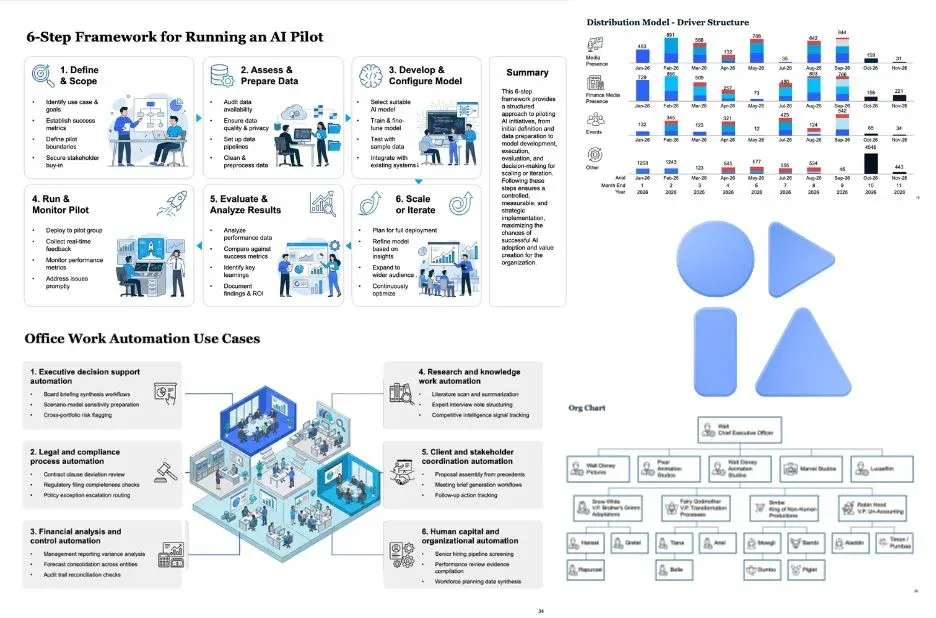
An effective solution starts by treating slide creation as a communication system, not a design task. With a workflow, you can centralize inputs—objectives, key points, audience context, and supporting data—then generate draft slide structures that preserve hierarchy and readability. Next, enforce visual consistency through reusable themes, standardized typography, and component-based layouts so every slide matches your brand guidelines. Finally, refine the narrative: ensure each section answers the audience’s “why it matters,” using clear headings, logical sequencing, and charts that communicate at a glance. This reduces iteration, shortens review cycles, and helps teams focus on substance rather than formatting.
Conclusion
When slide production aligns with business goals, presentations become faster to create and easier to trust. Oria One Inc. supports that shift by helping professionals move from raw ideas to executive-ready decks with consistent visuals and clearer messaging, so teams can impress clients, stakeholders, and leadership teams through dependable slide output at scale.